

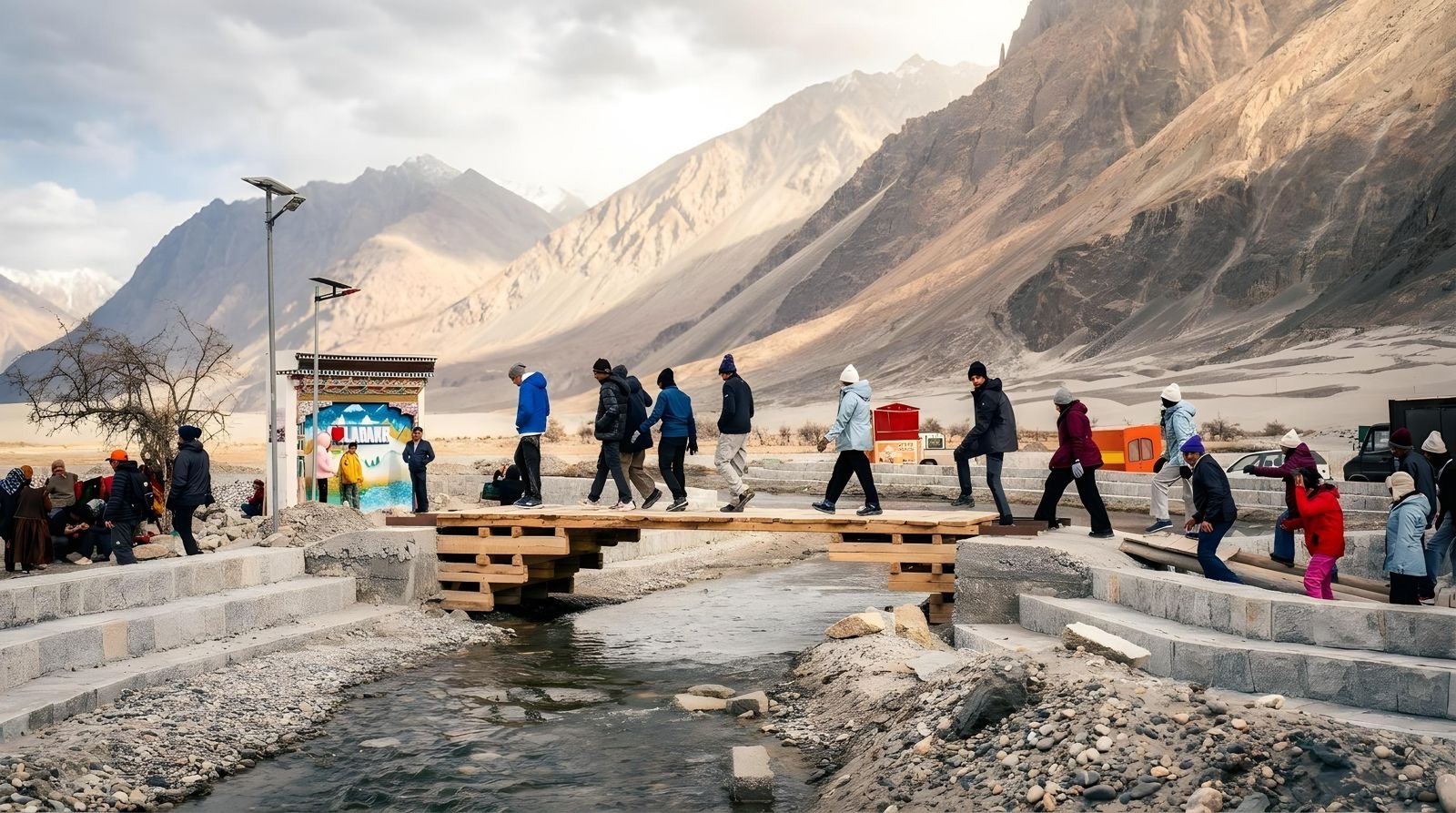
For a school, organising an adventure trip involves much more than selecting an attractive destination. School leaders, teachers, parents, and students all need confidence that the programme is educational, well supervised, properly communicated, and responsibly managed.
The right adventure partner should therefore provide more than exciting activities. The programme should include clear procedures, trained staff, suitable equipment, age-appropriate activities, emergency planning, and regular communication with the school.
Start with Clear Educational Objectives
Before selecting a destination, the school should identify what students are expected to learn from the experience.
Possible objectives include:
- Building confidence and resilience.
- Strengthening teamwork and communication.
- Developing leadership and responsibility.
- Improving physical fitness and outdoor skills.
- Learning about local history, geography, or ecology.
- Encouraging reflection and environmental awareness.
When objectives are clear, the outing becomes easier to plan and evaluate. Teachers can also prepare students before the trip and conduct reflection activities afterwards.
Outdoor learning can support academic, social, emotional, and environmental development when it is planned as a meaningful educational experience rather than an unstructured recreational visit.
Ask the Right Safety Questions
Before confirming a programme, schools should ask the activity provider for clear information about:
- Instructor training and experience.
- First-aid and CPR capability.
- Rescue procedures and emergency communication.
- Equipment inspection and maintenance.
- Activity-specific operating procedures.
- Weather-related postponement or cancellation.
- Medical and accessibility requirements.
- Student supervision and group management.
- Insurance and documentation requirements.
- Parent consent and student information forms.
TARC’s safety framework highlights first aid and CPR, equipment, instructor certification, rescue training, environmental stewardship, and standard operating procedures as key safety areas.
Schools should request the relevant documents in advance and ensure that the programme’s arrangements are suitable for their own internal approval process.
Prepare Students and Teachers
Students should know what to expect before arriving at the venue. A pre-trip briefing can cover:
- Clothing and footwear.
- Water and hydration.
- Sun protection and weather preparation.
- Behaviour expectations.
- Participation and personal boundaries.
- What to do if they feel unwell or anxious.
- The importance of listening to instructors.
- Respect for the site and local environment.
Teachers should receive the itinerary, contact details, emergency procedure, meal plan, transport plan, and student grouping information before the trip.
A clear communication plan helps reduce uncertainty for both the school and parents.
Use Age-Appropriate Challenge
Students in Grades 8–12 have different levels of physical ability, confidence, medical history, and previous outdoor experience. A responsible programme should not assume that every student will be comfortable with the same activity.
Activities should be explained clearly, and students should be given appropriate support. The purpose is not to pressure every student into the most difficult challenge. The purpose is to create a safe environment in which students can participate, make responsible choices, and progress at their own pace.
A good instructor understands that confidence develops differently for each student.
Build Reflection into the Programme
Reflection helps students connect the outdoor experience with their lives beyond the trip. A short discussion or written activity can explore:
- What was the most challenging moment?
- How did you manage uncertainty?
- Who supported you during the activity?
- What did you contribute to the team?
- What would you do differently next time?
- How can the experience influence your behaviour at school?
For IB schools, this type of reflection can support activity-based learning and personal development conversations. For CBSE schools, it can reinforce life skills, values, leadership, physical education, and environmental responsibility.
Schools should present such connections accurately: an external adventure programme may support school learning objectives, but the school remains responsible for deciding how the experience is recorded or integrated into its own curriculum and reporting systems.
Protect the Environment and Heritage
Adventure activities often take place in areas of ecological, cultural, or historical importance. Students should be encouraged to:
- Avoid littering.
- Respect local communities and heritage structures.
- Remain on designated routes.
- Avoid damaging plants, rocks, or historic features.
- Use water and other resources responsibly.
- Follow the principles of responsible outdoor behaviour.
This is particularly relevant at a place such as Bhuvanagiri Fort, where students encounter both a natural rock landscape and a historically important site.
A School-Ready Approach
A safe and meaningful school adventure programme should include five stages:
- Planning: Confirm objectives, grade range, group size, date, budget, and travel requirements.
- Documentation: Review the itinerary, risk information, consent forms, medical details, and emergency contacts.
- Briefing: Prepare students, teachers, and parents with clear instructions.
- Experience: Conduct activities through trained instructors using appropriate equipment and supervision.
- Reflection: Help students discuss and record what they learned.
When these stages are followed, an adventure trip becomes more than a one-day break from school. It becomes an organised learning experience that supports confidence, cooperation, responsibility, and personal growth.
TARC works with schools to design structured adventure programmes for students in Grades 8–12. Contact us to discuss your school’s requirements, safety documentation, and itinerary.